The world of cryptocurrency extends far beyond the household name of Bitcoin. While Bitcoin remains the trailblazer, a vast and vibrant universe of digital assets known as altcoins has emerged, each with its unique purpose, technology, and community. From powering decentralized applications to revolutionizing financial services and digital ownership, altcoins represent the innovative frontier of blockchain technology. Understanding this diverse landscape is crucial for anyone looking to navigate the broader crypto market, offering both exciting opportunities for growth and unique challenges that demand careful consideration.
What Are Altcoins? Deconstructing the “Alternative”
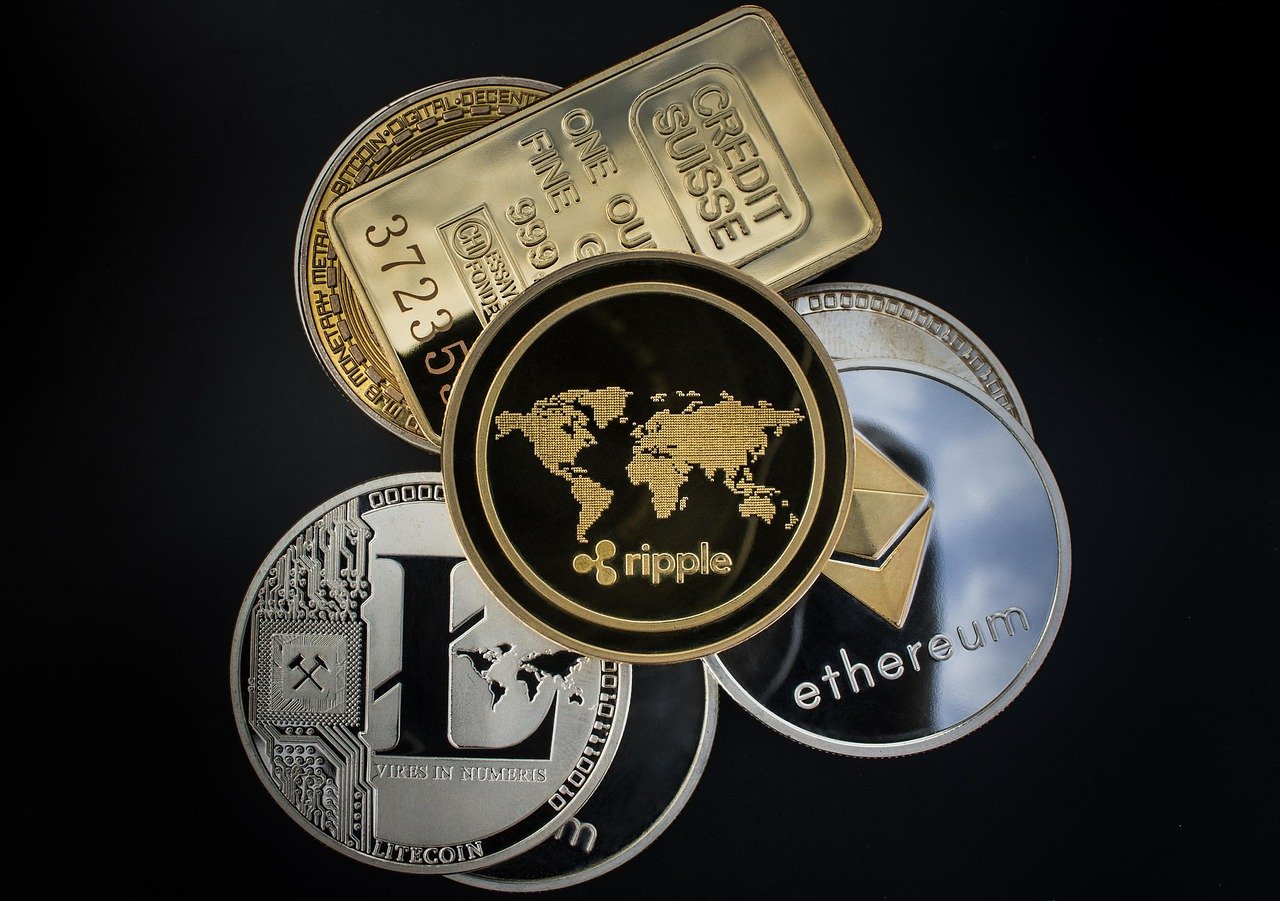
The term “altcoin” is a portmanteau of “alternative” and “coin,” simply referring to any cryptocurrency that is not Bitcoin (BTC). Since Bitcoin’s inception in 2009, thousands of altcoins have been created, each attempting to improve upon Bitcoin’s original design or offer entirely new functionalities. They range from widely recognized assets like Ethereum (ETH) to niche tokens supporting specific decentralized applications.
Defining Altcoins
-
Beyond Bitcoin: At its core, an altcoin is any digital currency designed to function similarly to Bitcoin, using blockchain technology for secure, decentralized transactions, but with distinct features or goals.
-
Innovation and Specialization: Many altcoins were created to address perceived limitations of Bitcoin, such as transaction speed, scalability, privacy, or to introduce entirely new concepts like smart contracts or decentralized finance (DeFi).
The Genesis of Altcoins
The first wave of altcoins began appearing shortly after Bitcoin gained traction, primarily aiming to be “better Bitcoins” or offer slight modifications. Early examples include:
-
Litecoin (LTC): Often called “silver to Bitcoin’s gold,” Litecoin was launched in 2011 with a focus on faster transaction confirmations and a different hashing algorithm (Scrypt instead of SHA-256).
-
Namecoin (NMC): One of the earliest forks of Bitcoin, launched in 2011, intending to create a decentralized domain name system (DNS) to enhance internet censorship resistance.
These early innovations paved the way for the explosion of altcoins we see today, moving beyond mere Bitcoin forks to entirely new blockchain architectures and use cases, fundamentally expanding the scope of what cryptocurrencies can achieve.
The Diverse Landscape of Altcoin Categories
The altcoin ecosystem is incredibly vast and varied, with projects falling into several distinct categories based on their primary function and underlying technology. Understanding these categories is key to comprehending their utility and potential.
Utility Tokens
Utility tokens provide users with access to a product or service within a specific blockchain ecosystem. They are not designed as investments themselves but derive value from the utility they offer.
-
Function: Used to pay for transaction fees, storage, computing power, or to access specific features within a decentralized application (dApp).
-
Examples:
-
Ethereum (ETH): While also a major cryptocurrency, ETH acts as a utility token (gas) to pay for transactions and computations on the Ethereum network.
-
Chainlink (LINK): Powers Chainlink’s decentralized oracle network, allowing smart contracts to securely interact with off-chain data.
-
Filecoin (FIL): Used to pay for and provide decentralized storage on the Filecoin network.
-
-
Actionable Takeaway: When evaluating utility tokens, focus on the real-world demand for the underlying service and the robustness of the project’s ecosystem.
Stablecoins
Stablecoins are cryptocurrencies designed to minimize price volatility by pegging their value to a “stable” asset, such as fiat currency (e.g., US dollar), gold, or even other cryptocurrencies. They are crucial for traders and for using crypto in daily transactions without worrying about price swings.
-
Purpose: Act as a bridge between traditional finance and the crypto world, offering stability during volatile market conditions.
-
Examples:
-
Tether (USDT) & USD Coin (USDC): Both are fiat-backed stablecoins, meaning each token is supposedly backed 1:1 by reserves of US dollars or equivalents held in traditional financial institutions.
-
Dai (DAI): A crypto-backed stablecoin, where its value is maintained by over-collateralizing with other cryptocurrencies like ETH, managed by the MakerDAO protocol.
-
-
Use Cases: Trading, remittances, hedging against market volatility, and decentralized lending/borrowing.
DeFi Tokens
Decentralized Finance (DeFi) tokens are native cryptocurrencies to various DeFi protocols that aim to recreate traditional financial services (lending, borrowing, trading) without intermediaries. These tokens often have utility within their specific protocols and can also represent governance rights.
-
Function: Facilitate lending, borrowing, swapping assets, and providing liquidity within decentralized applications.
-
Examples:
-
Uniswap (UNI): The governance token for the Uniswap decentralized exchange (DEX).
-
Aave (AAVE): The governance token for the Aave lending and borrowing protocol.
-
Compound (COMP): Rewards users for lending or borrowing assets on the Compound protocol and serves as its governance token.
-
-
Actionable Takeaway: Research the protocol’s Total Value Locked (TVL), security audits, and community activity before engaging with DeFi tokens.
Governance Tokens
Governance tokens grant holders the right to vote on proposals affecting the future development and parameters of a decentralized protocol. This empowers the community to guide the project’s evolution.
-
Empowerment: Allows token holders to propose and vote on changes, such as fee structures, treasury allocations, or protocol upgrades.
-
Examples: Many DeFi tokens like UNI, AAVE, and COMP also serve as governance tokens.
NFT-Related Tokens
These tokens are associated with the booming Non-Fungible Token (NFT) market, including metaverse projects, play-to-earn games, and NFT marketplaces.
-
Ecosystem Power: Used within specific NFT ecosystems for transactions, staking, or accessing exclusive content.
-
Examples:
-
Axie Infinity (AXS): The governance token for the popular play-to-earn game Axie Infinity.
-
The Sandbox (SAND): The utility token for The Sandbox metaverse, used for transactions and governance.
-
Decentraland (MANA): The native cryptocurrency of the Decentraland metaverse, used to buy virtual land and goods.
-
Why Invest in Altcoins? Potential & Pitfalls
Investing in altcoins presents a unique set of opportunities and risks compared to established assets like Bitcoin. A balanced understanding of both is essential for informed decision-making.
Potential Benefits
-
Higher Growth Potential: Many altcoins have smaller market capitalizations than Bitcoin, meaning they have more room for exponential growth if their projects gain significant adoption. A small investment can potentially yield substantial returns.
-
Diversification: Including various altcoins in a crypto portfolio can help diversify risk, as different projects may perform independently of Bitcoin’s price movements or even counter-cyclically.
-
Technological Innovation: Altcoins often represent cutting-edge blockchain solutions, offering access to projects that are pushing the boundaries of what’s possible with distributed ledger technology, from enhanced scalability to novel privacy features.
-
Specific Use Cases: Investors can support and gain exposure to projects solving real-world problems in areas like supply chain, healthcare, gaming, or decentralized finance.
Associated Risks
-
Higher Volatility: Altcoins, especially those with smaller market caps, are notoriously volatile. Prices can swing dramatically within short periods, leading to significant gains or losses.
-
Lower Liquidity: Many altcoins have lower trading volumes, making it harder to buy or sell large quantities without impacting the market price. This can be problematic during periods of high selling pressure.
-
Rug Pulls & Scams: The altcoin market is unfortunately prone to fraudulent projects, often termed “rug pulls,” where developers abandon a project and disappear with investor funds. Due diligence is paramount.
-
Regulatory Uncertainty: The regulatory landscape for altcoins is still evolving globally. Future regulations could negatively impact certain projects or the broader market.
-
Technical Complexity: Understanding the underlying technology, tokenomics, and competitive landscape of each altcoin project requires significant research, which can be challenging for new investors.
How to Evaluate Altcoin Projects: A Due Diligence Checklist
Given the inherent risks, thorough due diligence is non-negotiable before investing in any altcoin. A structured approach can help filter out speculative ventures from genuinely promising projects.
The Whitepaper & Team
-
Whitepaper Analysis: Read the project’s whitepaper to understand the problem it aims to solve, its proposed solution, technology, roadmap, and tokenomics. Look for clarity, feasibility, and originality.
-
Team & Advisors: Research the background, experience, and track record of the development team and advisors. Are they doxxed (publicly known)? Do they have relevant expertise? What have their past projects achieved?
Technology & Use Case
-
Innovation & Problem Solving: Does the project offer a unique technological solution? Does it address a real and significant problem? How does it compare to existing solutions?
-
Adoption & Ecosystem: Evaluate the project’s current adoption metrics, such as active users, transaction volume, and partnerships. A strong and growing ecosystem indicates potential for long-term viability.
Tokenomics & Market Cap
-
Token Distribution: Understand how tokens are distributed (e.g., initial sale, team allocation, community rewards). Look for fair distribution that doesn’t overly concentrate power in a few hands.
-
Supply Schedule: Analyze the total supply, circulating supply, and inflation/deflation mechanisms. How will new tokens enter the market? Will there be token burns or staking rewards?
-
Market Capitalization (MC) vs. Fully Diluted Valuation (FDV): Compare the current market cap with the fully diluted valuation (if all tokens were in circulation) to understand potential future dilution.
-
Liquidity: Check the liquidity of the token on various exchanges. Low liquidity can lead to significant price volatility and difficulty exiting positions.
Community & Development
-
Community Engagement: Assess the vibrancy and health of the project’s community across platforms like Discord, Telegram, Twitter, and Reddit. A strong, active community is a positive sign.
-
Developer Activity: Check public code repositories (e.g., GitHub) for regular updates, bug fixes, and ongoing development. Stagnant development can be a red flag.
-
Partnerships: Evaluate the quality and relevance of any announced partnerships. Do they add genuine value to the project?
Risk Assessment
-
Security Audits: For projects involving smart contracts (especially DeFi), confirm that reputable third parties have conducted security audits. These help identify vulnerabilities.
-
Regulatory Compliance: Consider the potential regulatory environment and whether the project is taking steps to comply with relevant laws.
-
Market Sentiment: While not a primary factor, understanding broader market sentiment and macroeconomic conditions can help inform timing.
Practical Strategies for Navigating the Altcoin Market
Engaging with the altcoin market requires a strategic and disciplined approach. Adopting best practices can help mitigate risks and improve your chances of success.
Diversification
Don’t put all your eggs in one basket. Instead of concentrating your investment in a single altcoin, spread your capital across several promising projects in different categories (e.g., a DeFi token, a gaming token, a Layer 1 blockchain). This strategy helps mitigate risk, as the underperformance of one asset won’t devastate your entire portfolio.
Start Small & Dollar-Cost Averaging (DCA)
Invest only what you can afford to lose. The altcoin market is highly speculative. For volatile assets, consider employing a Dollar-Cost Averaging (DCA) strategy, where you invest a fixed amount of money at regular intervals (e.g., weekly or monthly). This averages out your purchase price over time, reducing the impact of short-term price fluctuations.
Stay Informed & Be Wary of Hype
Continuous learning is crucial. Follow reliable crypto news sources, subscribe to project updates, and engage with reputable market analysts. However, always be critical and cautious. The crypto space is rife with hype, “moonshot” claims, and influencer-driven pumps. Do your own research (DYOR) and avoid making emotional decisions based on fear of missing out (FOMO).
Security Best Practices
Protect your assets diligently.
-
Hardware Wallets: For long-term holding of significant altcoin investments, use a hardware wallet (cold storage) like Ledger or Trezor to keep your private keys offline and secure.
-
Two-Factor Authentication (2FA): Always enable 2FA on all cryptocurrency exchanges and wallets.
-
Phishing Scams: Be extremely vigilant against phishing emails, fake websites, and social media scams attempting to steal your credentials or private keys.
Long-Term Vision vs. Short-Term Speculation
Decide whether you are investing for the long-term growth of a project’s technology and adoption or engaging in short-term trading based on price movements. Both have different strategies and risk profiles. For many altcoins, a long-term perspective focused on fundamental value and development can be more rewarding than chasing fleeting pumps.
Conclusion
Altcoins represent the vast and ever-evolving frontier of the blockchain industry, pushing the boundaries of decentralized technology, finance, and digital ownership. They offer an exciting realm of innovation and potential for significant returns, providing avenues for diversification beyond Bitcoin and access to groundbreaking projects solving real-world problems. However, this universe comes with its own set of substantial risks, including extreme volatility, lower liquidity, and the constant threat of scams.
Navigating the altcoin market successfully demands a commitment to rigorous due diligence, continuous learning, and a disciplined approach to risk management. By carefully evaluating whitepapers, understanding tokenomics, scrutinizing development teams, and adopting practical strategies like diversification and Dollar-Cost Averaging, investors can approach this dynamic space with greater confidence. As the digital economy continues to mature, altcoins will undoubtedly play a pivotal role in shaping its future, making an informed understanding of them an indispensable part of any serious crypto enthusiast’s knowledge base.